
Mold Removal in Detroit, MI
Taking the mold out is the easy part. Keeping it out means finding the water that fed it.
about mold removal service
Removing Mold Without Spreading It
Cutting into mold is the moment it becomes dangerous.Growth sitting on the back of a piece of drywall is doing very little until someone disturbs it. Pull that drywall off the wall without preparing first and the spores go into the air, travel on the currents moving through the house, and settle in rooms that never had a problem. A basement issue becomes a whole house issue in an afternoon.
That is why mold removal is not a demolition job. It is a containment job that happens to involve demolition, and it is the core of Mold Remediation. The sequence matters more than the muscle.
what's included
What Is Included in Our
Mold Removal Services
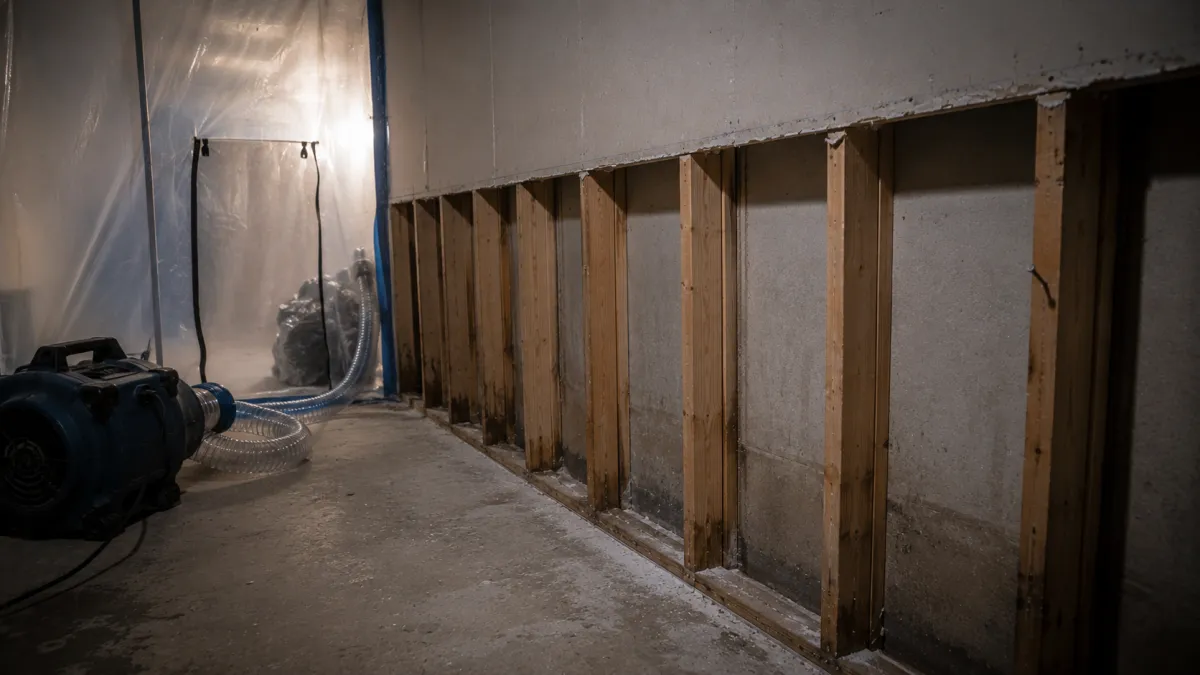
The work zone gets sealed before anything is touched. Plastic sheeting runs floor to ceiling across every opening, and a HEPA air scrubber runs inside the containment for the entire job, pulling airborne spores out of the space rather than letting them drift.
Then the affected material comes out. Porous material that has been colonized cannot be cleaned back to safe. Drywall, insulation, carpet pad, and particle board are removed and bagged inside the containment before anything leaves the area. Hard, non porous surfaces like concrete, framing, and sealed wood can usually be cleaned and treated in place.
Then we deal with the water. Because mold is not the disease. It is the symptom, and if the moisture source is still there, so is the next colony.
Our Process
Our Mold Removal Process
Step 1. Seal the area
Plastic sheeting goes up floor to ceiling before any material is disturbed. This is the step that keeps a basement problem in the basement.
Step 2. Run the air scrubber
HEPA filtration runs inside the containment throughout the removal, capturing spores that go airborne when material is cut.
Step 3. Remove and bag the material
Colonized drywall, insulation, and pad come out and are bagged inside the containment, not carried through the house first.
Step 4. Dry the structure
The moisture that fed the growth is still in the framing. Drying takes 3 to 7 days depending on how much water there was and what materials were affected. Without it, the mold returns
F.A.Q
Mold Removal FAQ
Here are answers to common questions about our restoration services.

Can I remove mold myself with bleach?
Bleach removes the color, not the growth, and it does nothing to the roots inside porous material. It also disturbs the mold and sends spores into the air without any containment in place, which spreads the problem.
Why does mold keep coming back after it is removed?
Because the water is still there. If the growth is taken out but the framing behind it stays wet, or the foundation still leaks, mold returns to the same wall within months. My Charlotte LLC finds the moisture source.
Will removing mold spread spores through my Detroit home?
Not if the area is sealed first. We put up containment and run HEPA filtration before anything is cut, which is what keeps spores from traveling into rooms that were never affected.
Can mold be cleaned off drywall or does it have to come out?
Porous material that has been colonized comes out. Mold grows into drywall and insulation rather than sitting on top of them, so surface cleaning leaves the growth in place. Hard, non porous surfaces can be cleaned.
How long does mold removal take?
Removal depends on the size of the affected area. The drying that follows takes 3 to 7 days depending on how much water there was and what materials were affected.
How do I know if the mold is actually gone?
The affected material is out and the structure is dry, verified with moisture readings. My Charlotte LLC records what was removed and the readings throughout, and that documentation belongs to you.

Water damage restoration serving Detroit and the surrounding metro area, based in Northville, MI. Emergency water removal, flooded basement cleanup, sewage backup,
and mold remediation. Brian leads every job and stays with the work until the structure is dry. Available 24 hours a day.


Service Areas
Contact Now
Office Location
302 W Main st., Northville Michigan 48167
Office Info
248-290-6470