
Odor Removal Services in Detroit
A smell that will not leave means something is still wet. We find it and treat the material, not the air.
24/7 Odor removal services
Why the Smell Comes Back
A musty basement smell is not a smell problem. It is a moisture problem announcing itself.Odor after water damage means organic material somewhere is still damp and still breaking down. It is usually inside a wall cavity, packed into insulation, or sitting under a floor that looks perfectly dry from above. The smell is the only symptom you can detect, which is exactly why it matters. Your nose found the water before your eyes did.
This is why air fresheners, ozone machines, and scented sprays fail. They mask the odor for a few days and then it comes back, because none of them touched the wet material producing it. In Detroit basements, where flooding is routine and drying is often cut short, this is one of the most common calls we take.
Musty smell that will not go away? Call Us
our Odor RemovaL
What Is Included in Our
Odor Removal
Source identification
We do not start with treatment. We start with moisture meters and inspection, tracing the smell back to the material producing it. A musty odor with no visible cause almost always means water inside a wall, under flooring, or in insulation.
Moisture verification
Before any odor treatment, we confirm the underlying moisture problem is resolved. Treating odor over a wet structure is wasted work, and we will tell you that rather than take the job twice.
Removal of affected material
Porous material that has absorbed contaminated water and started to break down cannot be deodorized. Soaked insulation, carpet pad, and water logged drywall come out.
Treatment of remaining surfaces
Once the source is gone and the structure is dry, remaining surfaces are cleaned and treated directly rather than covered with fragrance.
Structural Drying
The material has to be dry before the odor can be resolved for good. Drying typically takes 3 to 7 days depending on how much water there was and what materials were affected.
Honest scope
Some material cannot be saved, and some odors do not fully leave until it is replaced. You get told which is which.
Our Process
How We Restore Your Property Step by Step
Step 1. Find the source
We follow the smell to the material. Moisture meters and inspection tell us whether the water is inside a wall, under the flooring, or in the insulation.
Step 2. Confirm the moisture is resolved
If the structure is still wet, odor treatment will not hold. We verify with readings before going any further.
Step 3. Remove what cannot be deodorized
Porous material that has absorbed contaminated water and begun breaking down comes out. It cannot be cleaned back to neutral.
Step 4. Dry the structure
Air movers and dehumidifiers run until readings confirm the framing and subfloor are dry, because damp material will start producing odor again.
Step 5. Treat the remaining surfaces
Hard surfaces that stayed are cleaned and treated directly at the source of the smell.
Step 6. Verify
We check the space after the drying is complete. Brian does not call the job finished while the readings say the structure is still holding moisture.
WHO WE HELP
Homes and Businesses
Across Detroit
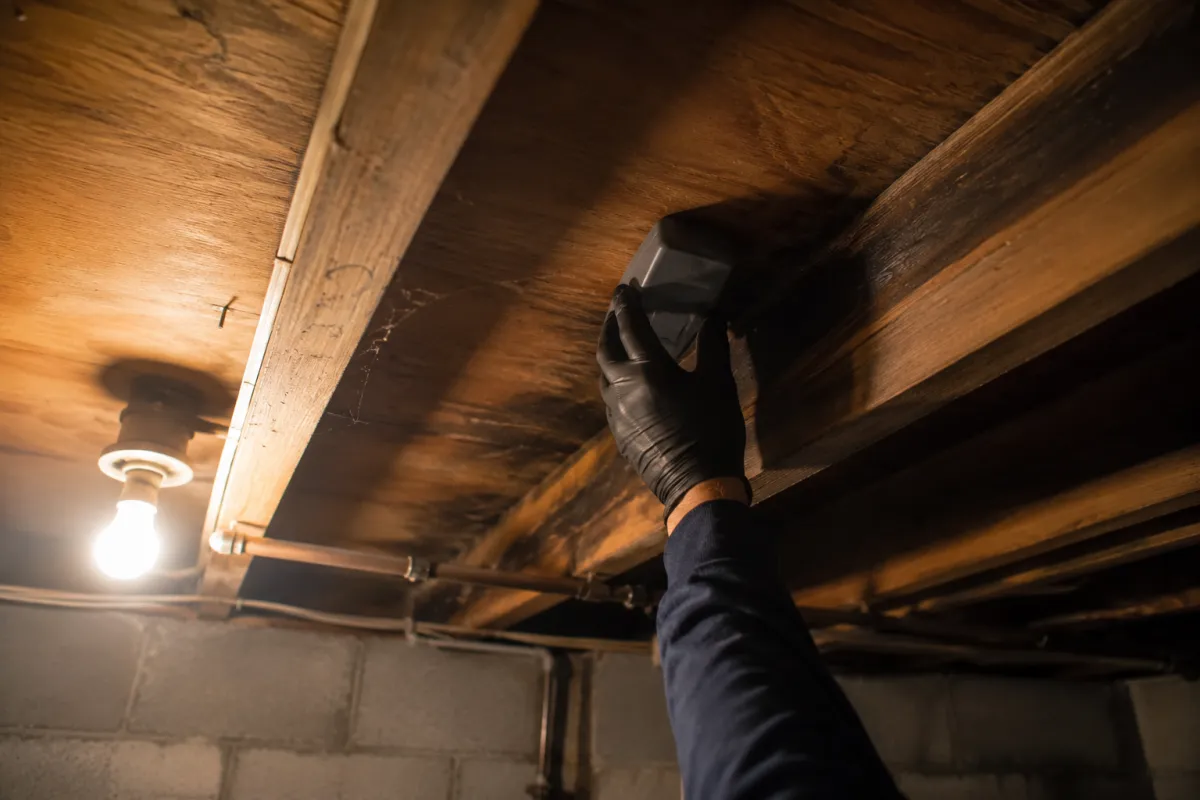
For homeowners, this is almost always the basement, and it is almost always after a flood that got cleaned up but never properly dried. The water came out, the floor looked fine, and weeks later the whole lower level smells musty. Families stop using the space. Some notice it worst in humid weather, when the moisture still in the structure gets active again.
For businesses, odor is a customer problem. A restaurant, a retail floor, or an office that smells musty loses people at the door, and no amount of explaining fixes it. We find the source and remove it so the space can be used normally again.
WHY Detroit CHOOSE us
Why Choose My Charlotte LLC?
On Call 24/7 Emergency Response
Most odor removal is theater. An ozone machine runs for a day, the space smells like nothing for a week, and then the musty smell returns because the wet insulation behind the wall never went anywhere.
We treat odor as evidence rather than as the problem. The smell tells us water is still present, so we find it, remove the material, and dry the structure. Brian stays on the drying until the readings say it is finished, which is the only thing that actually keeps the smell from coming back.
If the odor cannot be fully removed without replacing material, we say so instead of selling you another treatment.
Service Areas
Communities We Serve
We serve Detroit and the surrounding communities across Metro Detroit. Detroit · Dearborn · Dearborn Heights · Redford · Southfield · Livonia · Westland · Garden City · Canton · Plymouth · Northville · Novi · Farmington · Farmington Hills · West Bloomfield · Bloomfield Hills · Birmingham · Commerce Township · Walled Lake · Ann Arbor
F.A.Q
Frequently Asked
Questions
Here are answers to common questions about our restoration services.

Why does my Detroit basement still smell musty after it dried?
Because it probably did not dry. Surface dry is not structurally dry. Moisture stays inside framing, insulation, and subfloor long after the floor looks fine, and that damp material is what produces the smell.
Will an ozone machine or air freshener fix the smell?
Not permanently. Those treat the air, not the wet material producing the odor. The smell returns once the treatment fades, because the source was never touched.
Does a musty smell mean I have mold?
Often, yes. A musty odor with no visible cause usually means moisture and growth somewhere you cannot see, commonly inside a wall cavity or under flooring. We take readings to find out.
Learn More:Mold Remediation page
How long does odor removal take?
Finding and removing the source happens first. The drying that follows typically takes 3 to 7 days depending on how much water there was and what materials were affected.
Can you remove the smell without tearing anything out?
Sometimes, if the material is not badly affected and the structure can be dried. Porous material that absorbed contaminated water and started breaking down usually has to come out.
The smell is worse in summer. Why?
Humidity. Moisture still in the structure becomes more active in warm, humid weather, which is why a basement that seemed fine in March starts smelling in July.
What causes sewage smell in a basement?
Usually a backup, a dry floor drain trap, or contaminated material that was never fully removed. Sewage odor means contaminated water was present, and that material generally cannot be deodorized in place.

Water damage restoration serving Detroit and the surrounding metro area, based in Northville, MI. Emergency water removal, flooded basement cleanup, sewage backup,
and mold remediation. Brian leads every job and stays with the work until the structure is dry. Available 24 hours a day.


Service Areas
Contact Now
Office Location
302 W Main st., Northville Michigan 48167
Office Info
248-290-6470