
Emergency Water Extraction in
Detroit, MI
Removing standing water fast, before it soaks into the subfloor and the framing underneath.
about Emergency Water Extraction
When Water Is Still on the Floor
Emergency water extraction is the first thing that happens on a flooded property, and it is the part that cannot wait. While water is sitting on a floor, it is being absorbed. Subfloor drinks it. Drywall wicks it upward. Framing takes it in through the end grain. Every hour it stays down there, more of the structure moves from the drying list to the removal list.
This is the opening step of Water Damage Restoration rather than a separate service, but it is the step with the tightest clock. In Detroit basements, where the water tends to arrive in volume, getting it out fast is what determines how much of the room survives.
what's included
What Is Included in Our
Emergency Water Extraction
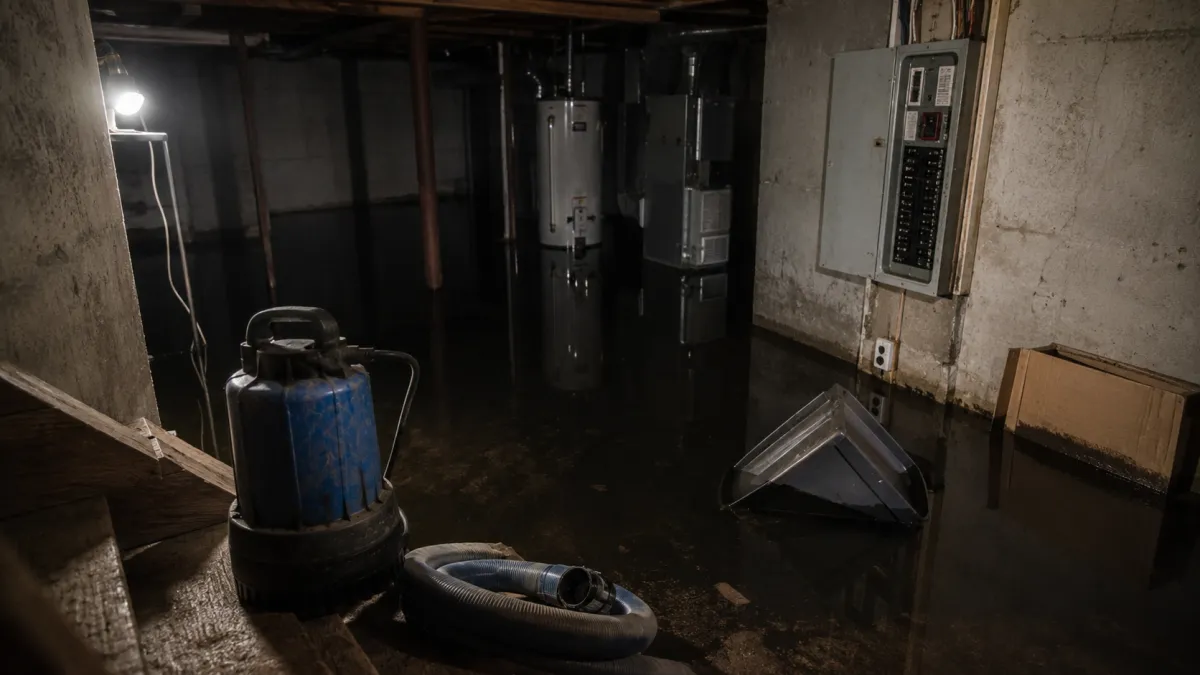
We arrive with commercial pumps and extraction units rather than shop vacuums. Submersible pumps handle standing water at depth, moving high volume out of a basement quickly. Truck mounted and portable extraction units pull water out of carpet, pad, and hard flooring where a pump cannot reach.We do not depend on the property's power to run any of it, which matters when a storm has taken out the electricity and the sump pump along with it.
Before we start, we shut off the source if it is still running. Extraction is pointless while a pipe is still open or water is still entering through a foundation. We also assess electrical hazards, because standing water around a panel, outlets, or a submerged furnace is a safety problem before it is a restoration one.
Our Process
Our Emergency Water Extraction Process
Step 1. Stop the source
A burst pipe keeps flooding until the main is shut. Foundation seepage keeps coming until the water outside recedes. We identify the source and stop what can be stopped.
Step 2. Clear electrical hazards
Standing water around outlets, a furnace, or an electrical panel gets addressed before anyone enters the water. Power to the affected area comes off first.
Step 3. Pump the standing water
Submersible pumps move volume out at depth. This is the fastest part of the job and the most urgent one.
Step 4. Extract from materials
Once the standing water is gone, extraction units pull the remaining water out of carpet, pad, and flooring, so drying can begin on a surface that is not still holding water.
F.A.Q
Emergency
Water Extraction FAQ
Here are answers to common questions about our restoration services.

How fast can you get to a flooded basement in Detroit?
My Charlotte LLC responds the same day, often within the hour for nearby communities. Water is absorbed into subfloor and framing within hours, so arrival time directly determines how much material can be dried instead of removed.
Can I just use a shop vacuum to remove the water myself?
A shop vacuum holds a few gallons and will not touch a flooded basement. It also does not pull water out of carpet pad or subfloor, which is where most of the water actually is once the surface looks clear.
My power is out. Can you still extract the water?
Yes. Our pumps and extraction equipment do not run off the property's power, which matters during storm outages when the sump pump has already stopped and water is still rising.
Is it safe to walk into a flooded basement?
Not if outlets, the electrical panel, the furnace, or the water heater are submerged or in contact with the water. Shut off power to the area from the main breaker if you can do it safely, then stay out.
How long does emergency water extraction take?
Extraction usually takes a few hours depending on volume and access. It happens on the first visit. Drying the structure afterward takes 3 to 7 days depending on how much water there was and what materials were affected.
Does extraction alone fix water damage in a Detroit basement?
No. Removing the water stops it getting worse, but the structure is still wet. Framing, subfloor, and drywall hold moisture long after the floor looks clear, and mold can begin growing within 24 to 48 hours if it is not dried.

Water damage restoration serving Detroit and the surrounding metro area, based in Northville, MI. Emergency water removal, flooded basement cleanup, sewage backup,
and mold remediation. Brian leads every job and stays with the work until the structure is dry. Available 24 hours a day.


Service Areas
Contact Now
Office Location
302 W Main st., Northville Michigan 48167
Office Info
248-290-6470