
Structural Drying in Detroit, MI
The floor feeling dry is not the same as the building being dry. We take readings until it is.
about structural drying service
Surface Dry Is Not Dry
This is the step where restoration jobs are won or lost, and it is the one nobody sees.Once the water is out and the ruined material is gone, the building itself is still wet. Framing holds water. Subfloor holds water. The bottom plate of a wall, sitting on concrete, holds water for a long time. None of that is visible. A basement can look completely finished, feel dry underfoot, and still be carrying enough moisture inside the wood to grow mold behind a wall nobody plans to open.
Structural drying is the part of Water Damage Restoration that decides whether the job actually worked. It is also the part that gets cut short, because the equipment is needed somewhere else and the floor already feels fine.
what's included
What Is Included in Our
Structural Drying Service
We dry the structure, not the room. Those are different jobs.Air movers are positioned to push air across wet surfaces and into open wall cavities, breaking the still layer of saturated air that sits against damp wood and slows evaporation to almost nothing. Commercial dehumidifiers pull that moisture out of the air so it does not just move from the wood into the room and back again.
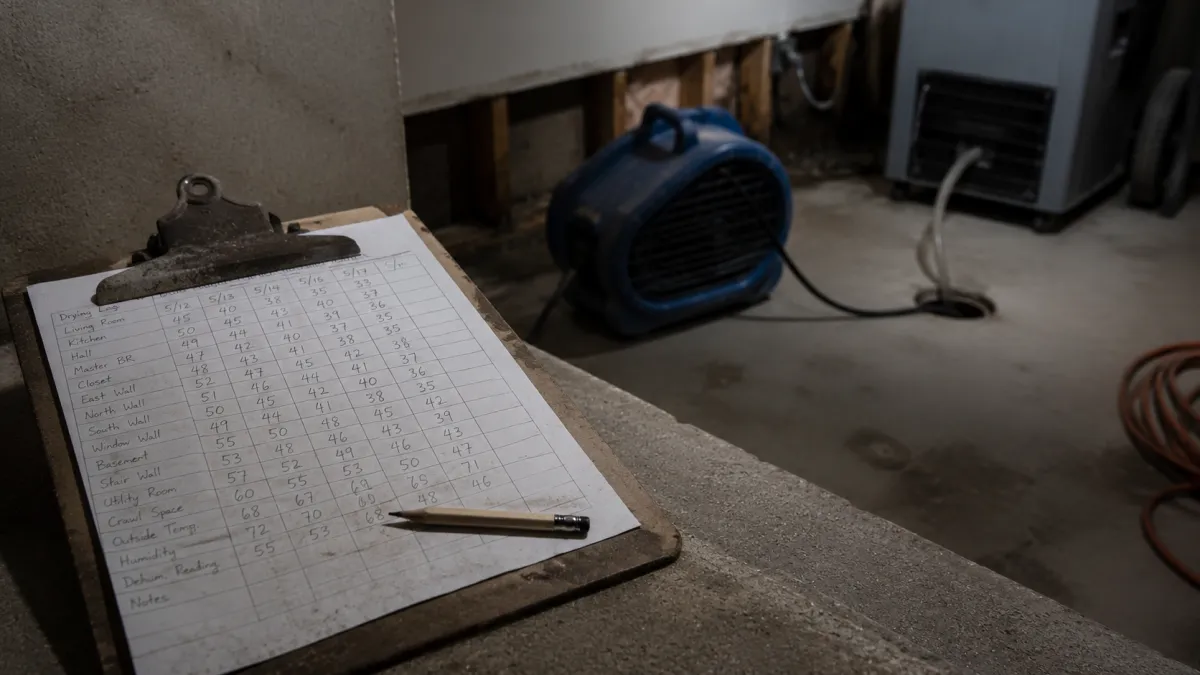
Then we measure. A moisture meter reads the actual water content of the framing and the subfloor, and those readings are taken every day the equipment runs. The numbers tell us whether the structure is drying, holding, or has reached the point where it is genuinely dry.
Drying typically takes 3 to 7 days depending on how much water there was and what materials were affected.
Our Process
Our Structural Drying Process
Step 1. Take the baseline readings
Before any equipment runs, we read the framing and the subfloor. That first number is what everything afterward gets measured against.
Step 2. Set the equipment
Air movers go where the wet material is, aimed into open cavities rather than at the middle of the room. Dehumidifiers are sized to the space.
Step 3. Read it every day
The readings tell us what is actually happening. A stalled number means something is wrong, usually trapped moisture behind material that should have come out.
Step 4. Stop when the readings say so
Not when the floor feels dry. Not when the schedule says the job is over. The equipment comes out when the wood is dry.
F.A.Q
Structural Drying FAQ
Here are answers to common questions about our restoration services.

How long does structural drying take?
Drying takes 3 to 7 days depending on how much water there was and what materials were affected. Larger areas and heavily saturated framing take the full seven. We take moisture readings daily rather than working to a fixed schedule.
My basement floor feels dry. Why is equipment still running?
Because the framing is not. Concrete and surface materials dry first while the wood behind the wall holds moisture for days longer. That trapped water is what grows mold, and it is invisible until it is a problem.
What is a moisture meter and why does it matter?
It measures the actual water content inside wood and building material rather than how the surface feels. Readings are the only way to know a structure is dry. Without them, drying is guesswork.
Can I just run a household fan and dehumidifier myself?
Household equipment does not move enough air or pull enough moisture to dry framing. It dries the surface, which is why a basement can smell musty months later even though it looked fine.
What happens if the drying is stopped too early?
Moisture stays in the framing and the wall cavity. Mold can begin growing within 24 to 48 hours in those conditions, and it grows out of sight until the smell or the staining appears.
Do I get the moisture readings?
Yes. My Charlotte LLC records the readings and the drying logs throughout the job, and that documentation belongs to you. It is useful if an insurance conversation follows.

Water damage restoration serving Detroit and the surrounding metro area, based in Northville, MI. Emergency water removal, flooded basement cleanup, sewage backup,
and mold remediation. Brian leads every job and stays with the work until the structure is dry. Available 24 hours a day.


Service Areas
Contact Now
Office Location
302 W Main st., Northville Michigan 48167
Office Info
248-290-6470